
In a closed-up winter home, the biggest air quality gains come from changing your furnace filter on schedule, keeping humidity between 30% and 50%, running exhaust fans, and testing your carbon monoxide (CO) detectors and radon levels. Sealing windows and doors keeps heat in during New York winters, but it also keeps dust, pet dander, cooking odors, and moisture in. These indoor air quality tips for closed-up winter homes help keep the air in your home cleaner while your heating system runs all season.
Keep Your Filter, Vents, and Ducts Working
Check Your Furnace Filter Every Month
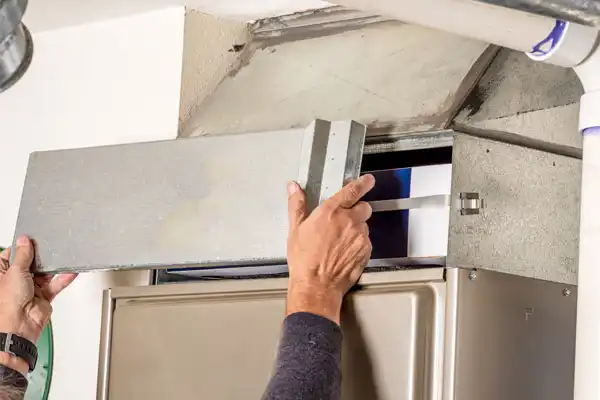
Your heating system pulls air through the filter every time it runs, so a clean filter is the easiest way to cut down on airborne dust. A clogged furnace filter makes your blower motor work harder, restricts airflow, and lets dust slip around the filter frame and settle in your ductwork. Inspect standard disposable filters every month during heating season, and replace them as soon as they look gray or caked with dust. Pleated filters with a higher MERV rating catch finer particles, like mold spores and pet dander, than basic fiberglass filters do.
Keep Supply and Return Vents Clear
Supply registers and return grilles need open space so your system can pull in stale air and send warm air out evenly. Furniture, area rugs, and holiday decorations can easily block floor and baseboard grilles. Blocked return grilles restrict airflow and make your system work harder to heat your home.
Schedule Air Duct Cleaning When Needed
Over the years, dust, pet hair, and drywall residue from past projects can collect inside your main ducts. Professional air duct cleaning removes that buildup so your blower isn’t pushing it back into your living spaces.
Control Humidity and Bring in Fresh Air
Keep Indoor Humidity Between 30% and 50%
Cold air holds little moisture, and heating it lowers indoor humidity even more. The right humidity level helps prevent dry, irritated airways and static shocks, and it helps keep wood floors and trim from cracking. A whole-home humidifier connects to your ductwork and adds moisture evenly, without the upkeep of portable tabletop units. Check your levels with a hygrometer and aim for 30% to 50%. If you see condensation on the inside of your windows, lower the humidity, since that moisture can lead to mold on window frames and sills.
Run Exhaust Fans and Consider a Fresh Air System
Controlled ventilation brings in fresh outdoor air with less heat loss than opening a window. Run your bathroom and kitchen exhaust fans while showering or cooking to send moisture and odors outside. For whole-home ventilation, a heat recovery ventilator (HRV) swaps stale indoor air for fresh outdoor air and uses the warmth of the outgoing air to preheat the incoming air. An energy recovery ventilator (ERV) does the same and also transfers some moisture, which helps keep winter air from getting too dry.
Watch for Hidden Hazards
Test Your Carbon Monoxide Detectors
Furnaces, boilers, and water heaters that burn fuel need extra attention when your home is sealed up for winter. Install a working CO detector outside each sleeping area and on every level of your home, and test it monthly. Have your furnace flue and chimney vents inspected before the heating season so bird nests, leaves, or loose mortar don’t block exhaust gases from leaving your home.
Add a Whole-Home Air Cleaner
A whole-home air cleaner installed in your ductwork filters the air each time your system runs. It helps reduce dust, pet dander, and cooking odors throughout the house, without a separate unit in every room.
Test Your Home for Radon
In winter, warm air rising inside your home creates slight suction that pulls soil gases, including radon, in through foundation cracks. Radon has no smell, taste, or color, so testing is the only way to know your levels. If a test comes back high, radon mitigation can lower the levels in your home.
Get a Clear Picture of Your Home’s Air
A closed-up house doesn’t have to mean stale, dry, or dusty air. Clean filters, the right humidity, good ventilation, and working safety detectors keep your home more comfortable all winter and reduce strain on your heating equipment. An indoor air quality assessment gives you a walkthrough of your current ventilation setup, points out airflow problems, and lists practical improvements for your home.
Schedule Indoor Air Quality Service in Binghamton, NY
Auchinachie Services has served Binghamton, NY, and surrounding communities since 1906, with upfront pricing and licensed, experienced professionals. Our technicians evaluate your ductwork, check combustion venting, and recommend filtration and ventilation options that fit your home. Contact us today to schedule an appointment.